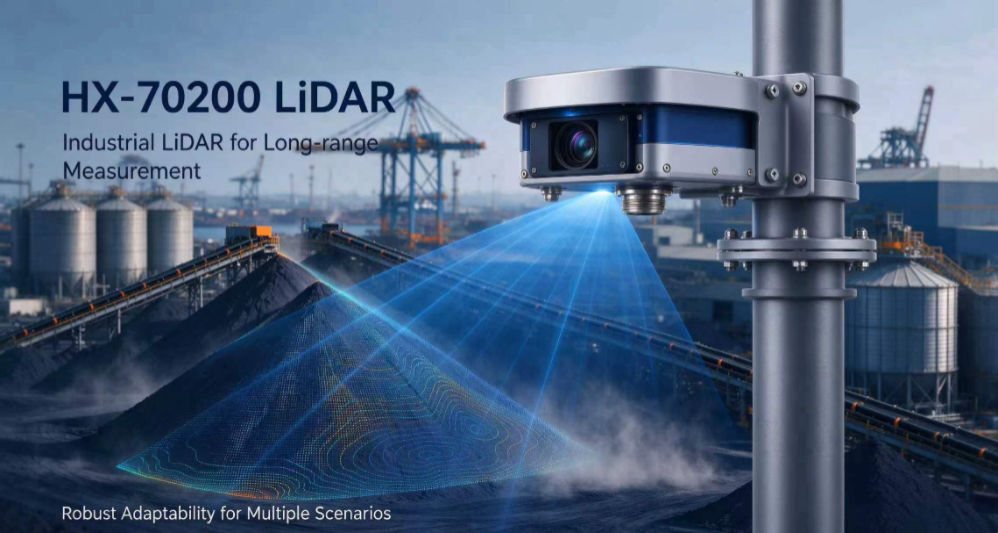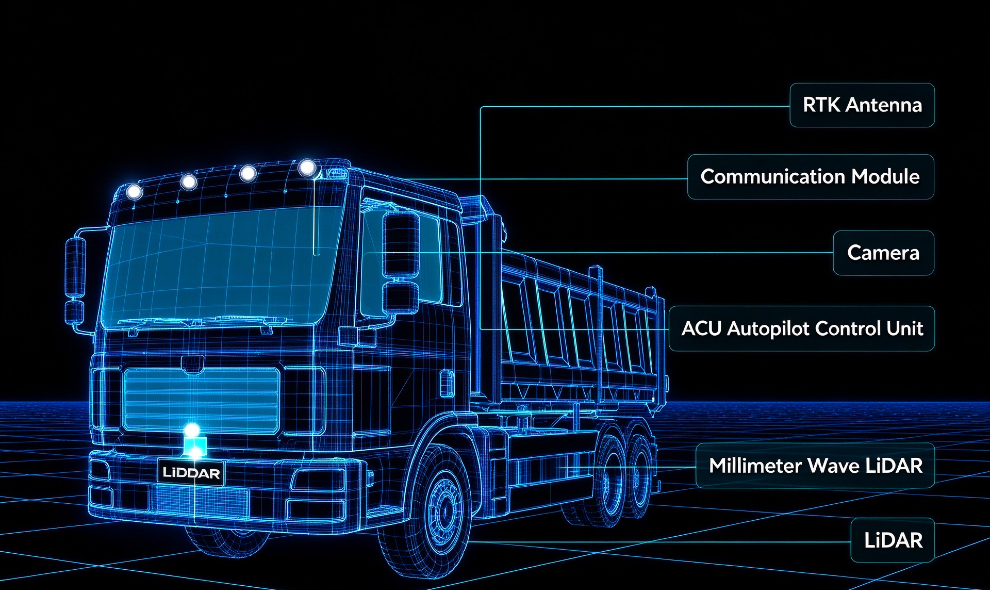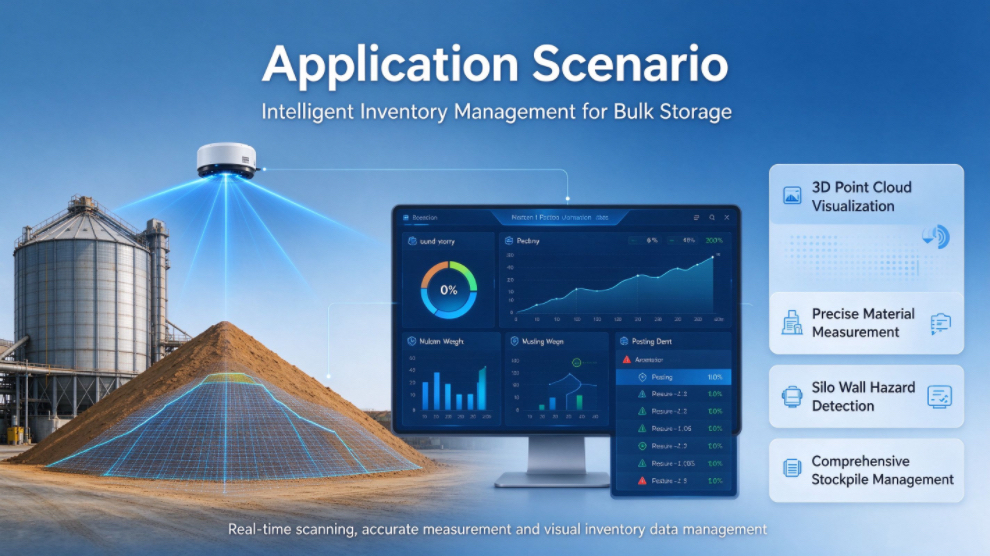
Ports and container terminals run under high pressure: ship-to-shore cranes (STS), rubber-tyred gantry cranes (RTG), rail-mounted gantry cranes (RMG), spreaders, container stacks, yard trucks and personnel move simultaneously in tight zones. Even a minor crane collision can cause expensive equipment damage, cargo loss, terminal downtime and safety risks. Traditional camera, radar or ultrasonic sensors struggle with harsh outdoor port conditions: heavy sunlight, fog, rain, dust, low light and irregular container profiles.
Industrial LiDAR has become the preferred perception hardware for modern port crane anti-collision systems. Mounted on crane booms, trolley frames, spreaders or gantry legs, our LiDAR generates real-time high-precision 3D point clouds to monitor the crane’s working envelope. It detects container stacks, adjacent cranes, yard trucks, pedestrians, vessel superstructures and other obstacles ahead of time.
Core Application Scenarios
LiDAR installed under the boom or trolley monitors vessel structures, hatch covers and container stacks on board. It triggers graded logic: warning → slow down → emergency stop, to prevent boom-to-ship and spreader-to-container collision during loading and unloading.
RTG / RMG Yard Crane Collision Avoidance
Sensors on gantry legs scan the travel path for neighbouring cranes, trucks, containers and site workers. Configurable multi-zone safety fields support automatic speed reduction and stop during gantry travel, trolley movement and container pick-and-place.
Spreader & Container Stack Protection
LiDAR scans stack height profiles continuously. It prevents spreader collision with uneven container stacks and supports soft landing guidance for automated container handling.
Retrofit for Existing Cranes
Our LiDAR is designed for easy retrofitting on old cranes. It outputs standard Ethernet, RS485 and switch signals, which can connect directly to crane PLC and safety controllers without major modification of the original control system.
Port crane safety is not only about accident prevention, but also about stable terminal throughput. Our LiDAR provides reliable 2D / 3D perception for both semi-automated and fully automated container terminals, helping system integrators build robust anti-collision solutions for new crane builds and renovation projects.
If you are a port automation integrator, crane OEM or terminal operator looking for LiDAR sensors for crane anti-collision, contact us for datasheets, test samples and technical support.